Basics of Cybersecurity under NIS2 — Prevention, Technology and Incident Response (ZKB1)
Cybersecurity, ICT Security
This two-day course gives practical skills in digital hygiene, threat awareness and the technical basics of online communication. It covers risks of data and cloud use, safe employee behaviour and the requirements of NIS2.
Participants learn hands-on practical habits, tools and procedures for safe cloud use, password systems and device protection. The course shows how to recognise, report and handle incidents and explains attack mechanics to assess risks.
THIS TRAINING COURSE WILL HELP YOU:
- Develop a "digital instinct" to spot suspicious emails and sites
- Store and share work files securely in the cloud
- Create a bulletproof password system
- Protect your digital identity
WHO SHOULD ATTEND?
- Anyone who uses a computer
- Users who handle email, official documents and cloud storage
- Home office workers who connect from home or public networks
- Employees who handle sensitive data (personal, payroll, bank data)
- Anyone who wants to apply skills to protect family, money and privacy
COURSE LOCATION AND AVAILABLE DATES
Praha + online (optional)
15–16 Feb 2027
368 €
CZECH
21–22 Jun 2027
368 €
CZECH
Need this course in English?
Public courses are usually delivered in Czech, but this course is also available in English. We can arrange private training for your team online, at your premises or in our classrooms, and tailor the content to your needs.
For groups of around 4 or more participants, private training can already be comparable in price to booking individual places on a public course. Send us your requirements and we’ll recommend the best format and provide an exact quote.
Request training in English
Course content:
Hide details
-
Introduction to digital security
-
Current cyber threat landscape
-
Importance of digital hygiene at work and home
-
Basic principles of safe online behaviour
-
Passwords and access credentials
-
Creating strong passwords and password management
-
Multi-factor authentication (MFA) and its importance
-
Secure login practices for services and apps
-
Recognising and preventing phishing
-
Types of phishing (email, SMS, phone)
-
Real examples of fraudulent messages and websites
-
Risks from attachments and documents (macros, archives, PDFs)
-
Steps to take if you suspect phishing
-
Cloud service security
-
Risks of sharing data in cloud services (OneDrive, SharePoint, Google Drive)
-
Correct permission and access settings
-
Protecting sensitive documents and data
-
Difference between sync and backup
-
Social engineering and manipulation techniques
-
Psychological tricks used by attackers
-
Case studies of real attacks
-
Defensive strategies against manipulation and pressure
-
Working with data, devices and physical security
-
Risks of unknown USB drives and external devices
-
No-click attacks and hidden threats from physical media
-
Safe handling of laptops, printing and documents
-
Basics of physical security at and outside the workplace
-
Mobile devices and remote work
-
Risks of using phones for work tasks
-
Loss or theft of devices and consequences
-
Safe use of mobile apps and access methods
-
Working from home and outside the office
-
Updates, patches and device management
-
Importance of OS and application updates
-
Risks of postponing updates
-
User role in updates and restarts
-
Incident response and reporting
-
What is a cyber incident and how to spot it
-
Immediate steps on suspected incidents
-
How, when and to whom to report incidents
-
What not to do (deleting emails, logs, hiding evidence)
-
Employee responsibilities and incident impacts
-
Practical exercises and scenarios
-
Identify threats in your own work environment
-
Phishing simulation
-
Incident scenarios (USB, ransomware, credential leaks)
-
Create a personal security plan
-
How the internet works from a security view
-
Internet basics — DNS names, IP addresses, URLs and domains
-
Public vs private IP, NAT, IPv4 and IPv6
-
Device and user identification online (fingerprinting)
-
Data transfer between a computer and a server and its risks
-
Identity spoofing and communication interception
-
DNS spoofing and fake websites
-
ARP spoofing and Man-in-the-Middle attacks
-
Risks of shared and public networks
-
Limits of HTTPS and TLS certificate protections
-
Wi‑Fi, public connections and working offsite
-
How Wi‑Fi works from a security perspective
-
Risks of open and public Wi‑Fi networks
-
Protecting communication on public networks
-
VPN — how it works, correct use and limitations
-
Anonymity, tracking and digital footprint
-
Internet anonymity — myths and realities
-
User tracking and data collection (IP, cookies, fingerprinting)
-
Anonymisation tools — TOR, proxies and their limits
-
Role of ISPs and monitoring of communications
-
Technical background of cyber attacks
-
Malware and malicious code — how they work and spread
-
Malware communication with remote servers
-
DoS and DDoS attacks — basic concepts
-
Web server breaches and their consequences
-
Technical context of security incidents
-
How a security incident occurs technically
-
Typical incident scenarios in everyday operations
-
Digital traces and evidence after an incident
-
Correct user actions during a technical incident
-
Prerequisites:
-
Basic user-level computer skills.
-
Recommended follow-up course:
-
Penetration Testing and Ethical Hacking (HCK1)
-
Schedule:
-
2 days (9:00-17:00)
-
Price per person:
-
368.00 € ( 445.28 € incl. 21% VAT)
Training and learning environment
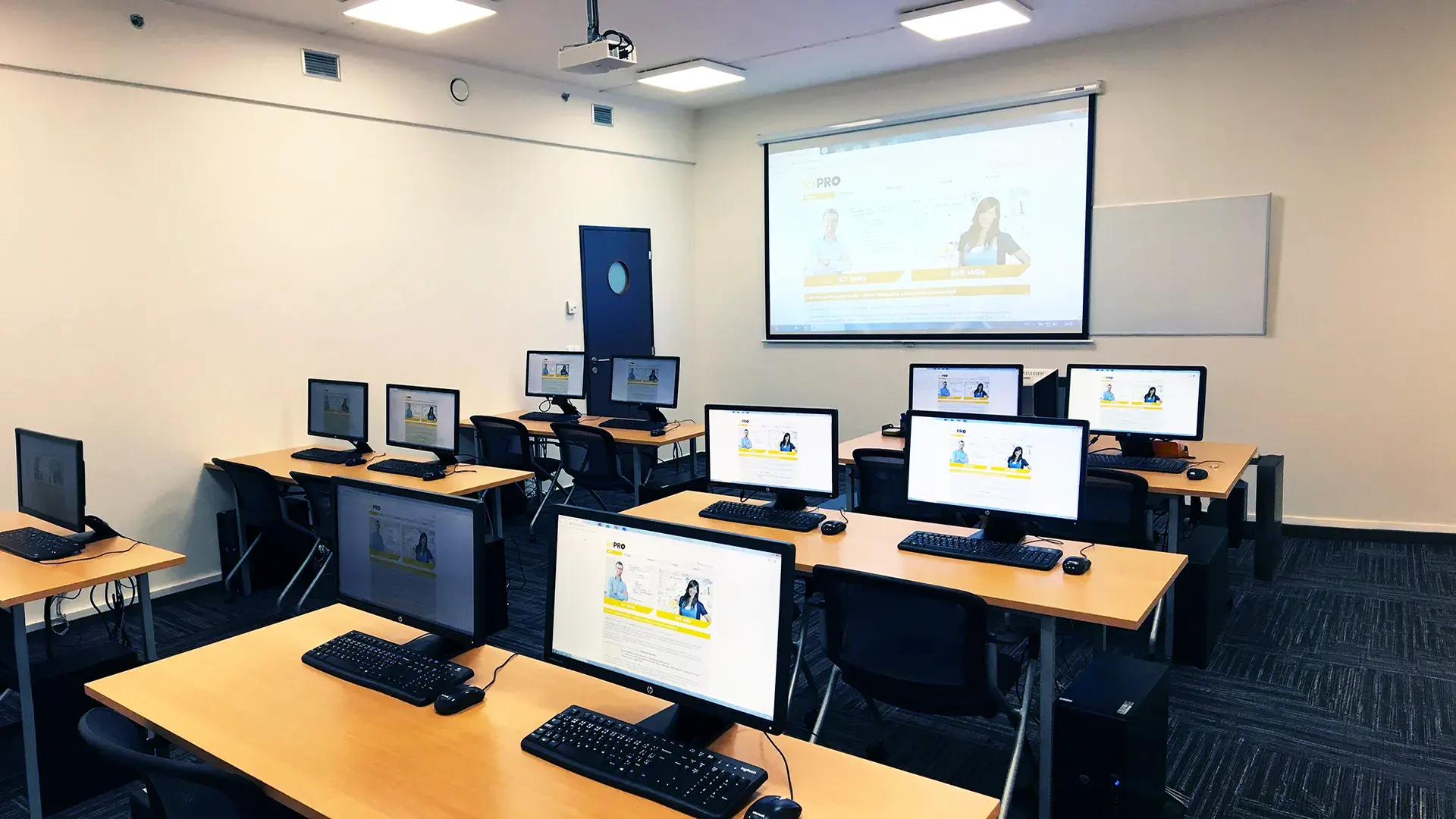 What does the environment for in-person IT courses look like?We hold training courses in our own classrooms equipped with modern computer equipment for each participant and a large projection screen. Each workstation is fitted with a powerful computer for seamless practical exercises, and the environment supports a calm, friendly atmosphere during training.
 Do I need to bring my own laptop to the classroom IT course?Our training rooms are fully equipped, so you do not need to bring your own laptop. A modern computer with all necessary hardware and software is ready for you at your workstation.
 Will you receive an official certificate after completing an IT course?Yes, upon successful completion of the training course, you will receive an official ICT Pro certificate confirming your participation and acquired technical skills. You can use it to verify your qualifications or add it to your professional profile.
 Where can you find our training center in Brno?The premises of the ICT Pro training center are located on the 1st floor of the COMGUARD building at Sochorova 38 in Brno. Positioned on the border of Žabovřesky and Komín, the location is easily accessible by both car and public transport.
 Where can you find our training center in Prague?The premises of the ICT Pro training center are located on the 1st floor of the Opatov Park building at Líbalova 1, Prague 11 – Chodov. The location provides a comfortable environment for your education with convenient access.
 What facilities and refreshments are available to you during training breaks?Our training centers feature a fully equipped kitchenette for a comfortable break during your courses. The facilities include a coffee machine, microwave, kettle, and a wide selection of drinks and snacks.
 What beverage refreshments are available during your course?A beverage station with a coffee machine, teas, syrups, and water is at your disposal throughout the entire training session. You can enjoy a coffee or another drink of your choice anytime during breaks.
 What light refreshments are provided for you during the courses?During course breaks, participants can enjoy light sweet snacks, pastries, and fruit syrups to mix their own drinks. Fresh water dispenser and plates are also available for your convenience.
 Should I bring my own snacks to ICT Pro training?There is no need to. A wide selection of savory snacks, sweet biscuits, and snack bars is available for you during breaks. Boost your energy for all-day focus right inside the training center premises.
 Can you spend training breaks in the fresh air?Yes, an outdoor terrace is available at our training center. During breaks between learning sessions, you can relax in the fresh air in a pleasant green environment.
 Where can you relax during course breaks?Our training center features a spacious outdoor terrace with seating options. During breaks between learning sessions, you can step outside to relax and recharge in the fresh air.