Cybersecurity, ICT Security
The EC-Council CHFI course prepares cybersecurity professionals to conduct effective digital forensic investigations and to bring their organization into a state of forensic readiness. Forensic readiness is crucial, as it can mean the difference between a minor incident and a major cyberattack that brings a company to its knees. This intensive hands-on course in digital forensic analysis immerses students in more than 68 forensic scenarios (labs), where they will work on crafted evidence files using tools from the world's leading digital forensic experts.
THIS TRAINING COURSE WILL HELP YOU:
- Address cybersecurity in companies
- Acquire skills in digital forensic analysis
- Prepare for the EC-Council CHFI certification
- Expand knowledge in cloud, IoT, and mobile device analysis
- Master the use of modern forensic tools
- Understand the legal framework for preserving digital evidence
WHO SHOULD ATTEND?
- Experienced (senior) professionals in IT security
- Auditors, consultants, network analysts
- Security analysts and engineers
- Network administrators, information security specialists
- Risk management professionals
CHFI represents a methodological approach to computer forensics, including searching and seizing, chain-of-custody, acquisition, preservation, analysis, and reporting of digital evidence. Students will become familiar with various forensic investigation techniques and standard forensic tools. During evidence acquisition and management across different operating environments, students will also learn the legal procedures necessary to preserve evidence and ensure its admissibility in court, enabling the prosecution of cybercriminals and exonerating the victimized organization from liability.
This 5-day course is designed for those seeking fundamental preparation for the EC-Council CHFI certification exam, which is recognized as a global standard for IT certification in forensic investigation.
The EC-Council CHFI course is offered as training in a virtual classroom in the US time zone (meaning the training runs from 3:00 PM CET to 11:00 PM CET daily) and is conducted in English. After completing the training, participants will have access to the full training recording. Training participants will receive EC-Council-accredited training materials, access to practical training labs, and a voucher for the EC-Council CHFI certification exam. The certification exam is not part of the course and can be taken after completing the course.
Certification
EC-Council Computer Hacking Forensics Investigator
Students will go beyond traditional forensic analysis of hardware and memory and focus on current topics in cloud forensics, mobile device forensics, IoT forensics, web application attack investigations, and malware forensics. CHFI represents a methodological approach to computer forensics, including searching and seizing, chain-of-custody, acquisition, preservation, analysis, and reporting of digital evidence. Students will become familiar with various forensic investigation techniques and standard forensic tools.
COURSE LOCATION AND AVAILABLE DATES
Contact us
Need this course in English?
Public courses are usually delivered in Czech, but this course is also available in English. We can arrange private training for your team online, at your premises or in our classrooms, and tailor the content to your needs.
For groups of around 4 or more participants, private training can already be comparable in price to booking individual places on a public course. Send us your requirements and we’ll recommend the best format and provide an exact quote.
Request training in English
Course content:
Hide details
-
Computer Forensics in Today’s World
-
Understand the Fundamentals of Computer Forensics
-
Understand Cybercrimes and their Investigation Procedures
-
Understand Digital Evidence and eDiscovery
-
Understand Forensic Readiness
-
Understand the Role of Various Processes and Technologies in Computer Forensics
-
Identify the Roles and Responsibilities of a Forensic Investigator
-
Understand the Challenges Faced in Investigating Cybercrimes
-
Understand Various Standards and Best Practices Related to Computer Forensics
-
Understand Laws and Legal Compliance in Computer Forensics
-
Computer Forensics Investigation Process
-
Understand the Forensic Investigation Process and its Importance
-
Understand First Response
-
Understand the Pre-investigation Phase
-
Understand the Investigation Phase
-
Understand the Post-investigation Phase
-
Understanding Hard Disks and File Systems
-
Describe Different Types of Disk Drives and their Characteristics
-
Explain the Logical Structure of a Disk
-
Understand the Booting Process of Windows, Linux, and macOS Operating Systems
-
Understand Various File Systems of Windows, Linux and macOS Operating Systems
-
Understand File System Analysis
-
Understand Storage Systems
-
Understand Encoding Standards and Hex Editors
-
Analyze Popular File Formats Using Hex Editor
-
Data Acquisition and Duplication
-
Understand Data Acquisition Fundamentals
-
Understand eDiscovery
-
Understand Data Acquisition Methodology
-
Prepare an Image File for Examination
-
Defeating Anti-forensics Techniques
-
Understand Anti-forensics Techniques
-
Discuss Data Deletion and Recycle Bin Forensics
-
Illustrate File Carving Techniques and Ways to Recover Evidence from Deleted Partitions
-
Explore Password Cracking/Bypassing Techniques
-
Detect Steganography, Hidden Data in File System Structures, Trail Obfuscation, and File Extension Mismatch
-
Understand Techniques of Artifact Wiping, Overwritten Data/Metadata Detection, and Encryption
-
Detect Program Packers and Footprint Minimizing Techniques
-
Windows Forensics
-
Understand Windows Forensics
-
Collect Volatile Information
-
Collect Non-volatile Information
-
Perform Windows Memory Analysis
-
Perform Windows Registry Analysis
-
Perform Electron Application Analysis
-
Perform Web Browser Forensics
-
Examine Windows Files and Metadata
-
Understand ShellBags, LNK Files, and Jump Lists
-
Understand Text-based Logs and Windows Event Logs
-
Linux and Mac Forensics
-
Collect Volatile Information in Linux
-
Collect Non-volatile Information in Linux
-
Understand Linux Memory Forensics
-
Understand Mac Forensics
-
Collect Volatile Information in Mac
-
Collect Non-volatile Information in Mac
-
Understand Mac Memory Forensics and Mac Forensics Tools
-
Network Forensics
-
Understand Network Forensics
-
Summarize Event Correlation Concepts
-
Identify Indicators of Compromise (IoCs) from Network Logs
-
Investigate Network Traffic
-
Perform Incident Detection and Examination Using SIEM Tools
-
Understand Wireless Network Forensics
-
Detect and Investigate Wireless Network Attacks
-
Malware Forensics
-
Understand Malware Concepts
-
Understand Malware Forensics
-
Perform Static Malware Analysis
-
Analyzing Suspicious Documents
-
Perform System Behavior Analysis
-
Perform Network Behavior Analysis
-
Perform Ransomware Analysis
-
Investigating Web Attacks
-
Understand Web Application Forensics
-
Understand Internet Information Services (IIS) Logs
-
Understand Apache Web Server Logs
-
Detect and Investigate Various Attacks on Web Applications
-
Dark Web Forensics
-
Understand the Dark Web and Dark Web Forensics
-
Determine How to Identify the Traces of Tor Browser during Investigation
-
Perform Tor Browser Forensics
-
Cloud Forensics
-
Understand Cloud Computing Concepts
-
Understand Cloud Forensics
-
Understand Amazon Web Services (AWS) Fundamentals
-
Perform AWS Forensics
-
Understand Microsoft Azure Fundamentals
-
Perform Microsoft Azure Forensics
-
Understand Google Cloud Fundamentals
-
Perform Google Cloud Forensics
-
Email and Social Media Forensics
-
Understand Email Basics
-
Explain Email Crime Investigation and its Steps
-
Understand U.S. Laws Against Email Crime
-
Explain Social Media Forensics
-
Mobile Forensics
-
Understand Mobile Device Forensics
-
Understand Android and iOS Architecture, Boot Process, and File Systems
-
Understand Mobile Forensics Process
-
Investigate Cellular Network Data
-
Perform File System Acquisition
-
Understand Phone Locks, Rooting, and Jailbreaking of Mobile Devices
-
Perform Logical Acquisition on Mobile Devices
-
Perform Physical Acquisition on Mobile Devices
-
Perform Android and iOS Forensic Analysis
-
IoT Forensics
-
Understand IoT Concepts
-
Perform Forensics on IoT Devices
-
Schedule:
-
5 days (15:00-23:00)
-
Price per person:
-
2 396.00 € (2 899.16 € incl. 21% VAT)
-
Language:
-
English
Training and learning environment
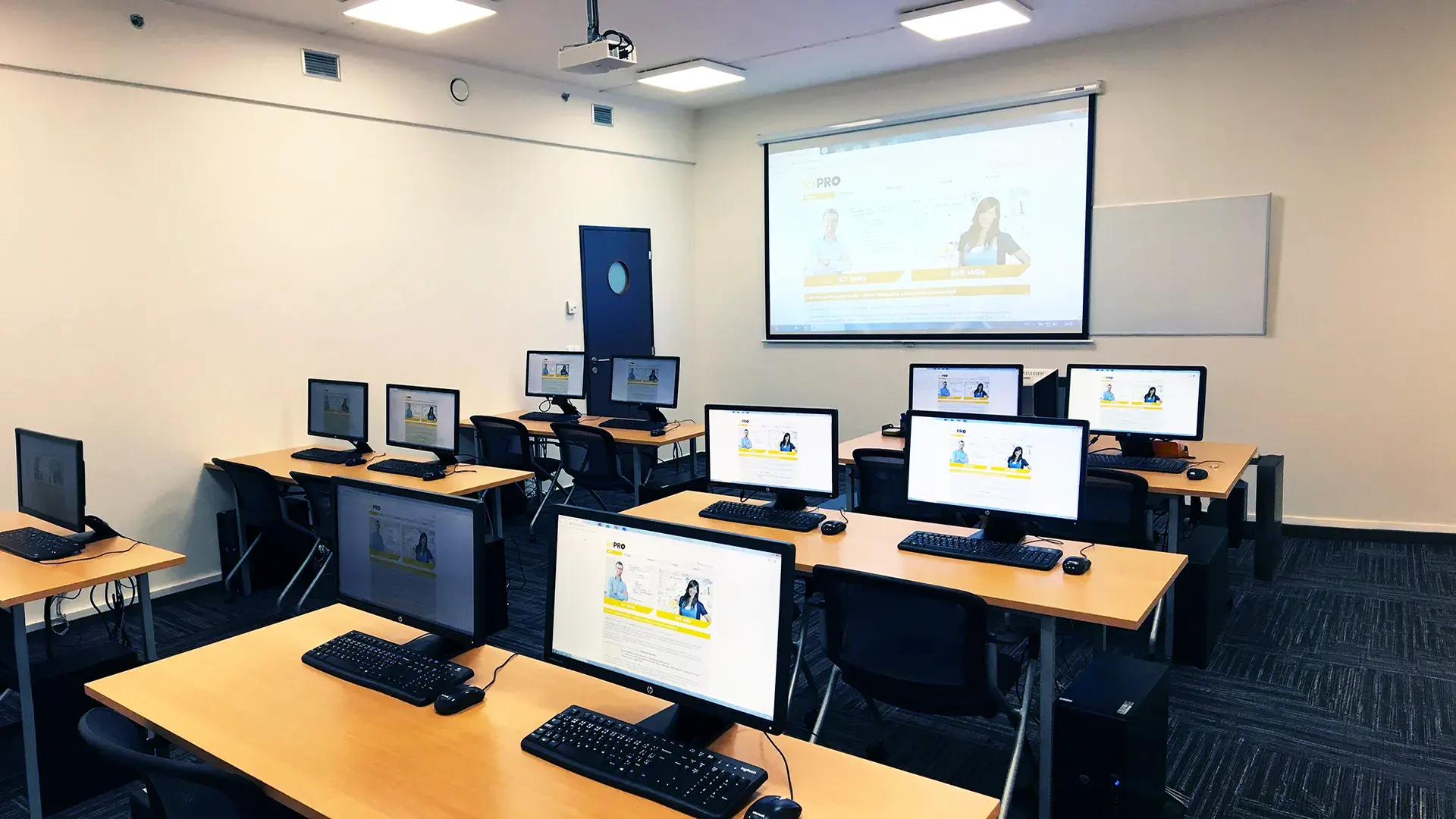 What does the environment for in-person IT courses look like?We hold training courses in our own classrooms equipped with modern computer equipment for each participant and a large projection screen. Each workstation is fitted with a powerful computer for seamless practical exercises, and the environment supports a calm, friendly atmosphere during training.
 Do I need to bring my own laptop to the classroom IT course?Our training rooms are fully equipped, so you do not need to bring your own laptop. A modern computer with all necessary hardware and software is ready for you at your workstation.
 Will you receive an official certificate after completing an IT course?Yes, upon successful completion of the training course, you will receive an official ICT Pro certificate confirming your participation and acquired technical skills. You can use it to verify your qualifications or add it to your professional profile.
 Where can you find our training center in Brno?The premises of the ICT Pro training center are located on the 1st floor of the COMGUARD building at Sochorova 38 in Brno. Positioned on the border of Žabovřesky and Komín, the location is easily accessible by both car and public transport.
 Where can you find our training center in Prague?The premises of the ICT Pro training center are located on the 1st floor of the Opatov Park building at Líbalova 1, Prague 11 – Chodov. The location provides a comfortable environment for your education with convenient access.
 What facilities and refreshments are available to you during training breaks?Our training centers feature a fully equipped kitchenette for a comfortable break during your courses. The facilities include a coffee machine, microwave, kettle, and a wide selection of drinks and snacks.
 What beverage refreshments are available during your course?A beverage station with a coffee machine, teas, syrups, and water is at your disposal throughout the entire training session. You can enjoy a coffee or another drink of your choice anytime during breaks.
 What light refreshments are provided for you during the courses?During course breaks, participants can enjoy light sweet snacks, pastries, and fruit syrups to mix their own drinks. Fresh water dispenser and plates are also available for your convenience.
 Should I bring my own snacks to ICT Pro training?There is no need to. A wide selection of savory snacks, sweet biscuits, and snack bars is available for you during breaks. Boost your energy for all-day focus right inside the training center premises.
 Can you spend training breaks in the fresh air?Yes, an outdoor terrace is available at our training center. During breaks between learning sessions, you can relax in the fresh air in a pleasant green environment.
 Where can you relax during course breaks?Our training center features a spacious outdoor terrace with seating options. During breaks between learning sessions, you can step outside to relax and recharge in the fresh air.