Penetration Testing and Ethical Hacking (HCK1)
Cybersecurity, ICT Security
This course is aimed at Windows and Linux administrators and teaches core hacking tools and techniques for security testing. Through hands-on labs you will learn to operate common tools and workflows and use Kali Linux for system checks.
The training shows practical LAN attacks and compromises of local Windows clients, combined with network analysis and defensive checks. It teaches methods to audit systems ethically, reproduce attacks safely, and validate fixes on your own infrastructure.
THIS TRAINING COURSE WILL HELP YOU:
- Identify and assess common security threats
- Gain hands-on experience with hacking tools
- Understand core concepts of cybersecurity
WHO SHOULD ATTEND?
- IT technicians and support staff
- Server and system administrators
- Software developers and security engineers
COURSE LOCATION AND AVAILABLE DATES
22–24 Feb 2027
752 €
CZECH
24–26 May 2027
752 €
CZECH
Praha + online (optional)
22–24 Feb 2027
752 €
CZECH
24–26 May 2027
752 €
CZECH
Need this course in English?
Public courses are usually delivered in Czech, but this course is also available in English. We can arrange private training for your team online, at your premises or in our classrooms, and tailor the content to your needs.
For groups of around 4 or more participants, private training can already be comparable in price to booking individual places on a public course. Send us your requirements and we’ll recommend the best format and provide an exact quote.
Request training in English
Course content:
Hide details
-
Basic Windows commands for users, processes, network, services and registry
-
Traffic analysis using netstat and its parameters
-
Description of configuration files and registries for network services
-
Basics of Wireshark and Network Monitor on Windows
-
Analysis of TCP, UDP and IP protocols
-
Capturing passwords on the network
-
Link-layer protocol analysis, e.g. CDP
-
Client-server model in networks
-
Capture and analysis of ARP, HTTP, FTP, DNS, DHCP, RDP, IPSec, Skype and more
-
Using filters in Wireshark
-
Basic Unix commands for network tasks
-
Example of sniffing on Linux
-
Changing MAC address in Windows
-
Introduction to ethical hacking
-
Types of attackers and their motivation
-
Methods for gathering information about targets
-
Hacker tools for Linux and Windows
-
Basics of inventory and use of network-layer scanners
-
Demonstration of various scanners and inspecting higher layers
-
NetBIOS scanning
-
Specialized scanners and web server checks
-
Detecting sniffers with specialized tools
-
Using independent vulnerability databases
-
Inventorying via higher-layer protocols like LDAP, SNMP and others
-
Basics of viruses, classification and removal with practical demo
-
Use of Sysinternals tools
-
Detecting and removing infections with antivirus tools
-
Kernel and memory manipulation by malware and rootkits
-
Introduction to rootkits and removal methods
-
Use of trojans to control a system
-
Practical trojan removal from an OS
-
Attacks on the network layer
-
Password capture and a "Man in the Middle" demonstration
-
Using ettercap to capture passwords
-
Attacks on protocols and services such as DNS, ARP, HTTP and more
-
Direct attacks on network devices
-
Demonstrations of DoS and MAC table exhaustion attacks
-
Bypassing firewalls, IDS and honeypots
-
Logging of normal and unusual activity
-
Ensuring response to unusual network behavior
-
Demonstration of monitoring and detection tools
-
Attacks on web and proxy servers
-
Attacks targeting IPv6
-
Security checks for Microsoft IIS web server
-
Protecting remote access with VPNs and potential attacks
-
Privilege escalation on remote systems and remote takeover demo
-
Defenses using encryption such as SSL, IPSec and related techniques
-
Actions after discovering a compromised computer
-
Tracing attacker activity
-
Hiding traces of illegal activity
-
Using standard security audit tools and procedures
-
Prerequisites:
-
Basic experience with Windows and Linux and a basic understanding of TCP/IP security.
-
Recommended previous course:
-
Basics of the TCP/IP Protocol (TCP1)
-
Recommended follow-up course:
-
Penetration Testing and Ethical Hacking in WANs (HCK2)
-
Schedule:
-
3 days (9:00-17:00)
-
Price per person:
-
752.00 € ( 909.92 € incl. 21% VAT)
Training and learning environment
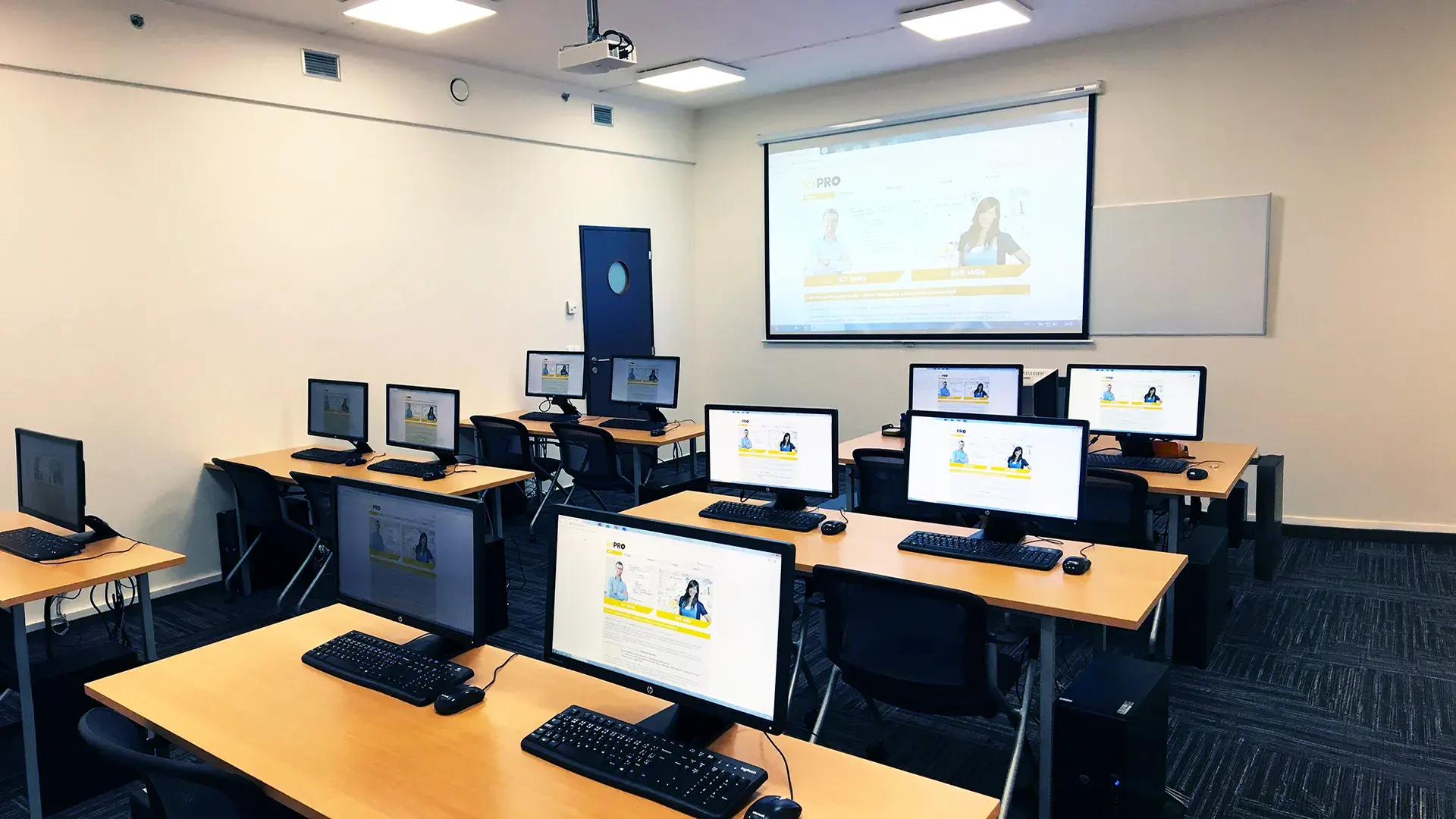 What does the environment for in-person IT courses look like?We hold training courses in our own classrooms equipped with modern computer equipment for each participant and a large projection screen. Each workstation is fitted with a powerful computer for seamless practical exercises, and the environment supports a calm, friendly atmosphere during training.
 Do I need to bring my own laptop to the classroom IT course?Our training rooms are fully equipped, so you do not need to bring your own laptop. A modern computer with all necessary hardware and software is ready for you at your workstation.
 Will you receive an official certificate after completing an IT course?Yes, upon successful completion of the training course, you will receive an official ICT Pro certificate confirming your participation and acquired technical skills. You can use it to verify your qualifications or add it to your professional profile.
 Where can you find our training center in Brno?The premises of the ICT Pro training center are located on the 1st floor of the COMGUARD building at Sochorova 38 in Brno. Positioned on the border of Žabovřesky and Komín, the location is easily accessible by both car and public transport.
 Where can you find our training center in Prague?The premises of the ICT Pro training center are located on the 1st floor of the Opatov Park building at Líbalova 1, Prague 11 – Chodov. The location provides a comfortable environment for your education with convenient access.
 What facilities and refreshments are available to you during training breaks?Our training centers feature a fully equipped kitchenette for a comfortable break during your courses. The facilities include a coffee machine, microwave, kettle, and a wide selection of drinks and snacks.
 What beverage refreshments are available during your course?A beverage station with a coffee machine, teas, syrups, and water is at your disposal throughout the entire training session. You can enjoy a coffee or another drink of your choice anytime during breaks.
 What light refreshments are provided for you during the courses?During course breaks, participants can enjoy light sweet snacks, pastries, and fruit syrups to mix their own drinks. Fresh water dispenser and plates are also available for your convenience.
 Should I bring my own snacks to ICT Pro training?There is no need to. A wide selection of savory snacks, sweet biscuits, and snack bars is available for you during breaks. Boost your energy for all-day focus right inside the training center premises.
 Can you spend training breaks in the fresh air?Yes, an outdoor terrace is available at our training center. During breaks between learning sessions, you can relax in the fresh air in a pleasant green environment.
 Where can you relax during course breaks?Our training center features a spacious outdoor terrace with seating options. During breaks between learning sessions, you can step outside to relax and recharge in the fresh air.