Software architecture – designing enterprise applications in the AI era (SWARCH1)
Programming, OOA, UML
AI can dramatically accelerate software development. Just as quickly, however, it can create technical debt. Inconsistent design, poorly chosen technologies or difficult-to-maintain code can put an entire project at risk. Learn how to design software architecture that stands up to the demands of AI-First development.
The training will guide you through modern architectural approaches, design patterns and principles of technology decision-making. Using practical examples, we will demonstrate how to use AI when designing and reviewing architecture, prevent errors, and create secure, scalable and sustainable enterprise applications.
THIS TRAINING COURSE WILL HELP YOU:
- Understand the principles of software architecture and the architect’s responsibilities in modern development
- Make informed choices between monolithic, microservices, serverless and other architectural approaches
- Learn key design patterns and principles for creating sustainable software
- Identify technical debt and prevent architectural mistakes, including the risks of AI-generated code
- Use AI as an assistant when designing, documenting and reviewing architecture
- Design testable applications and implement controls that help maintain solution quality over the long term
WHO SHOULD ATTEND?
- Software architects and system designers
- Developers and tech leads responsible for application design and quality
- Analysts and project managers involved in designing software solutions
- DevOps and CI/CD specialists collaborating on application architecture and operations
- IT managers who need to make informed assessments of technology decisions and AI-related development risks
COURSE LOCATION AND AVAILABLE DATES
Filter dates:
DateLocationFormat
LanguagePrice
PrahaPraha (hybrid)
Hybrid
This session takes place simultaneously in the classroom and online. You can choose your preferred way to attend during registration.
Czech
512 € 620 € incl. VAT
PrahaPraha (hybrid)
Hybrid
This session takes place simultaneously in the classroom and online. You can choose your preferred way to attend during registration.
Czech
512 € 620 € incl. VAT
PrahaPraha (hybrid)
Hybrid
This session takes place simultaneously in the classroom and online. You can choose your preferred way to attend during registration.
Czech
512 € 620 € incl. VAT
Need this course in English?
Course content:
Hide details
-
1. Evolution of software architecture over time
-
Historical development of software architecture in the context of evolving technologies and business requirements
-
2. Modern enterprise application development
-
Specific characteristics of enterprise applications and requirements for their long-term sustainability
-
Challenges of contemporary software development and the most common causes of project failure
-
Development organization, team collaboration, outsourcing and management methodologies
-
AI-assisted and AI-First development – benefits, limitations and the changing role of the developer and architect
-
Technical debt – how it arises, why AI can accelerate it and how to prevent it
-
3. Software architecture fundamentals
-
What software architecture is and how it affects the application lifecycle
-
Roles and responsibilities of the software architect, including collaboration with AI assistants
-
Architectural requirements – security, performance, scalability, availability and maintainability
-
Technology decisions and their trade-offs, Architecture Decision Records (ADR)
-
Architecture documentation – diagrams, models and using AI to create them
-
Evolving architecture over time and managing architectural changes
-
4. Enterprise application architecture
-
Monolithic, modular and distributed architecture – benefits and limitations
-
Microservices – when they make sense and when they only increase solution complexity
-
Event-driven architecture and asynchronous communication between components
-
Application interface design – REST APIs, contracts and system integration
-
On-premises, cloud and serverless – architectural and operational trade-offs
-
Clean Architecture, Onion Architecture and Domain-Driven Design (DDD)
-
Common architectural mistakes, undesirable dependencies and their impact on technical debt
-
5. Persistent storage
-
SQL databases and their specific characteristics
-
NoSQL storage
-
Blobs
-
Other data storage technologies
-
6. Architecture tools and governance in the AI era
-
Versioning source code, configuration and architectural documentation
-
Development platforms, automation and tools supporting consistent architecture
-
AI as an architectural assistant – analyzing designs, identifying risks and proposing alternatives
-
Architectural rules and constraints for AI-generated code – managing context and accountability
-
Documentation tools, Architecture as Code and continuous documentation updates
-
7. Architectural principles and design patterns
-
SOLID principles and separation of responsibilities among individual components
-
Dependency Injection, Inversion of Control and dependency management
-
Repository Pattern and Unit of Work – benefits, limitations and appropriate use
-
Command Query Responsibility Segregation (CQRS) and separation of read and write operations
-
Event Sourcing and Saga Pattern in distributed systems
-
Design patterns for modularity, extensibility and effective collaboration between developers and AI
-
Refactoring, architectural antipatterns and identifying technical debt in AI-generated code
-
Testability, automated checks and enforcement of architectural rules
-
8. Practical examples and architectural review
-
Designing an enterprise application with a REST API and demonstrating the Mediator pattern
-
Comparing architectural options and documenting decisions using ADRs
-
Reviewing an AI-generated design – identifying inappropriate dependencies, security risks and technical debt
-
Automated testing and checks for compliance with architectural rules
-
Prerequisites:
-
A basic understanding of software development and how enterprise applications work. Programming knowledge is an advantage but not a requirement. Practical demonstrations focus primarily on understanding architectural principles and decision-making.
-
Schedule:
-
2 days (9:00-17:00)
-
Price per person:
-
512.00 € ( 619.52 € incl. 21% VAT)
Training and learning environment
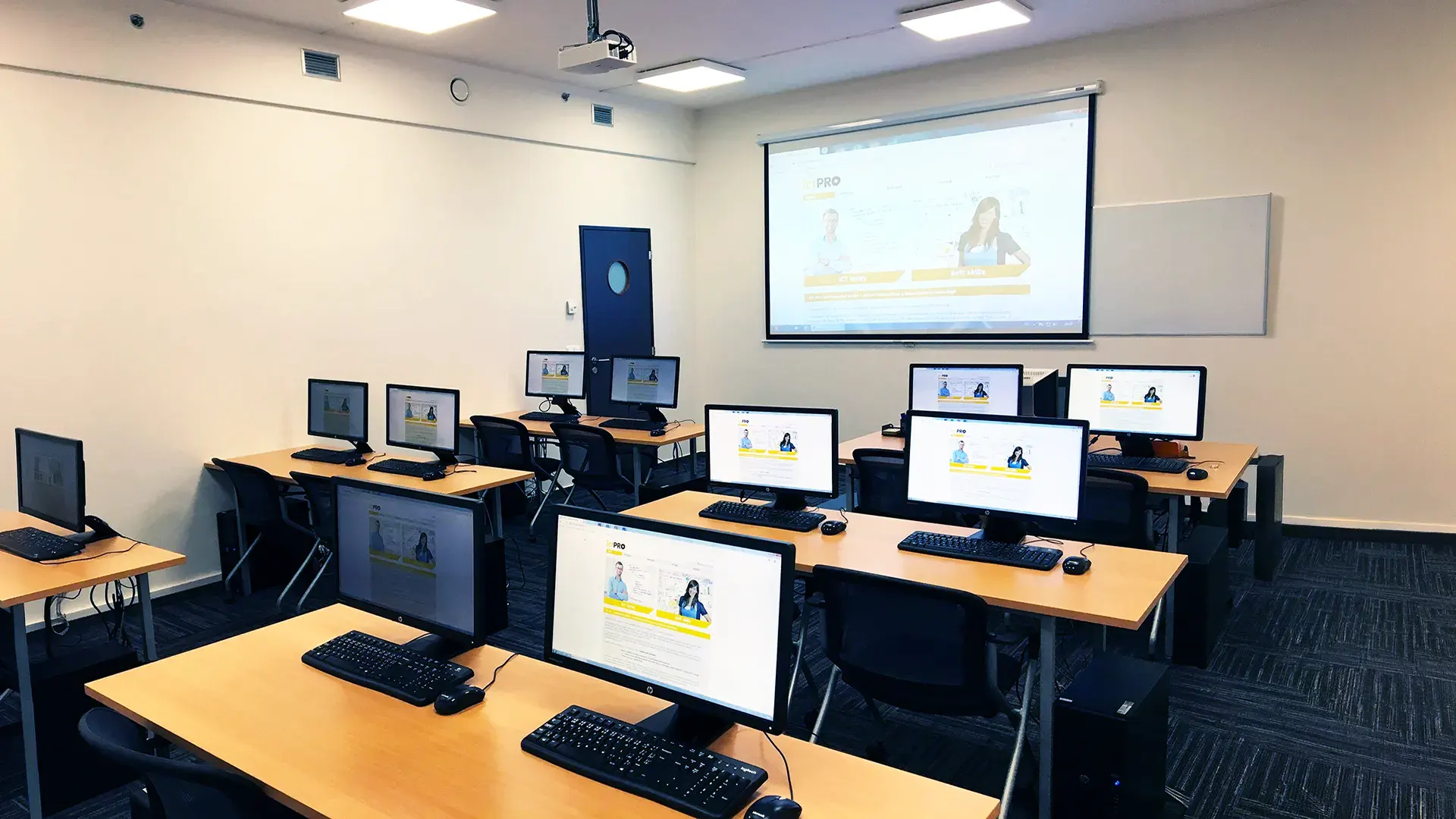 What does the environment for in-person IT courses look like?We hold training courses in our own classrooms equipped with modern computer equipment for each participant and a large projection screen. Each workstation is fitted with a powerful computer for seamless practical exercises, and the environment supports a calm, friendly atmosphere during training.
 Do I need to bring my own laptop to the classroom IT course?Our training rooms are fully equipped, so you do not need to bring your own laptop. A modern computer with all necessary hardware and software is ready for you at your workstation.
 Will you receive an official certificate after completing an IT course?Yes, upon successful completion of the training course, you will receive an official ICT Pro certificate confirming your participation and acquired technical skills. You can use it to verify your qualifications or add it to your professional profile.
 Where can you find our training center in Brno?The premises of the ICT Pro training center are located on the 1st floor of the COMGUARD building at Sochorova 38 in Brno. Positioned on the border of Žabovřesky and Komín, the location is easily accessible by both car and public transport.
 Where can you find our training center in Prague?The premises of the ICT Pro training center are located on the 1st floor of the Opatov Park building at Líbalova 1, Prague 11 – Chodov. The location provides a comfortable environment for your education with convenient access.
 What facilities and refreshments are available to you during training breaks?Our training centers feature a fully equipped kitchenette for a comfortable break during your courses. The facilities include a coffee machine, microwave, kettle, and a wide selection of drinks and snacks.
 What beverage refreshments are available during your course?A beverage station with a coffee machine, teas, syrups, and water is at your disposal throughout the entire training session. You can enjoy a coffee or another drink of your choice anytime during breaks.
 What light refreshments are provided for you during the courses?During course breaks, participants can enjoy light sweet snacks, pastries, and fruit syrups to mix their own drinks. Fresh water dispenser and plates are also available for your convenience.
 Should I bring my own snacks to ICT Pro training?There is no need to. A wide selection of savory snacks, sweet biscuits, and snack bars is available for you during breaks. Boost your energy for all-day focus right inside the training center premises.
 Can you spend training breaks in the fresh air?Yes, an outdoor terrace is available at our training center. During breaks between learning sessions, you can relax in the fresh air in a pleasant green environment.
 Where can you relax during course breaks?Our training center features a spacious outdoor terrace with seating options. During breaks between learning sessions, you can step outside to relax and recharge in the fresh air.