Modern E-learning and Moodle: From Theory to Practice (ELRN1)
Programming, Web Programming
This practical course introduces modern e-learning and teaches how to design professional online courses. It covers the latest technologies and trends, explains the Moodle platform and shows how to structure engaging, accessible learning.
Training combines hands-on Moodle practice with concrete skills: course creation, building tests and forums and managing user roles and permissions. Participants learn media prep, grading, evaluation and how to measure e-learning effectiveness.
THIS TRAINING COURSE WILL HELP YOU:
- Create and structure Moodle-based online courses
- Design and grade tests, assignments and forums
- Prepare audio/video and simple e-learning animations
- Manage users, roles and measure learning effectiveness
WHO SHOULD ATTEND?
- Teachers and corporate trainers
- Instructional designers and e-learning developers
- LMS administrators and support staff
- HR professionals responsible for training
COURSE LOCATION AND AVAILABLE DATES
Need this course in English?
Public courses are usually delivered in Czech, but this course is also available in English. We can arrange private training for your team online, at your premises or in our classrooms, and tailor the content to your needs.
For groups of around 4 or more participants, private training can already be comparable in price to booking individual places on a public course. Send us your requirements and we’ll recommend the best format and provide an exact quote.
Request training in English
Course content:
Hide details
-
E-learning - introduction and general information
-
Characteristics of good online courses (practical examples)
-
Educational technology standards
-
Organizing interactive online instruction
-
Digital teaching
-
Computer-assisted learning
-
Teaching and learning via the World Wide Web
-
Choosing and delivering computer-based instruction
-
Education with new technologies
-
Intrapersonal intelligence
-
Ten core strategies for a virtual school
-
Distance learning
-
Cyber education
-
Learner profile
-
Current perspectives on e-learning
-
Blended learning
-
Knowledge management
-
Dynamic content
-
Measuring e-learning effectiveness
-
Reaction
-
Learning
-
Behavior
-
Outcomes and evaluation
-
Return on investment
-
Benefits of e-learning identified by Czech organizations
-
Technologies used
-
Preparing audio and video for e-learning courses
-
Preparing animations (Adobe Captivate, SlideToaster)
-
Preparing tests
-
E-learning - frequently asked questions
-
Training center based on online instruction
-
Music in online learning
-
Shareware-style educational library
-
Working with the Moodle system
-
Using Moodle as a student, teacher (tutor) and administrator
-
User registration and login in the Moodle LMS
-
Creating new courses
-
Managing learning materials (files, labels, pages, etc.)
-
Creating course activities (assignments, forums, quizzes, etc.)
-
Configuring and grading quizzes
-
Creating and managing users, roles and permissions
-
Prerequisites:
-
Basic computer skills and access to a web browser; no prior Moodle experience required.
-
Schedule:
-
3 days (9:00-17:00)
Training and learning environment
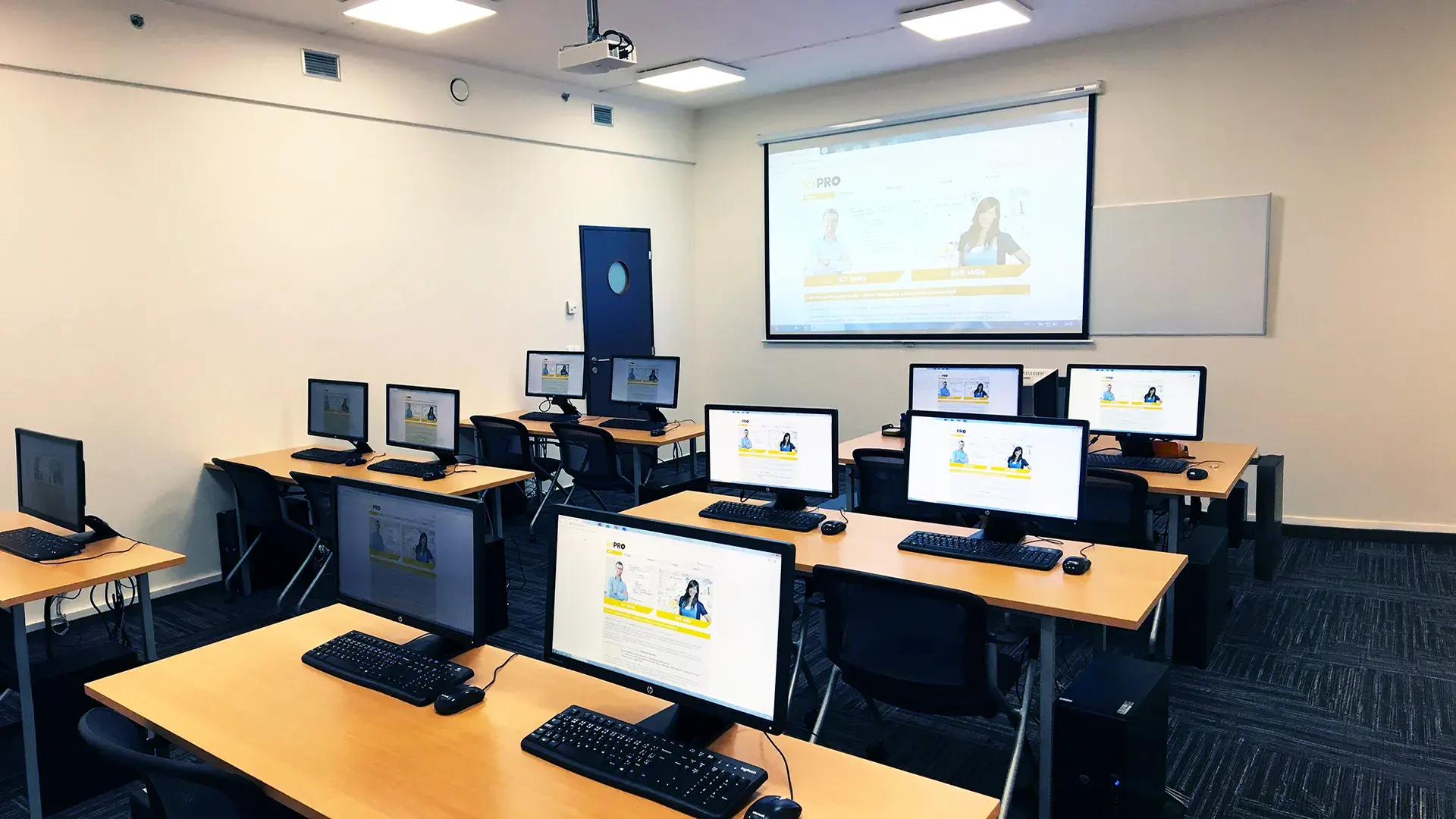 What does the environment for in-person IT courses look like?We hold training courses in our own classrooms equipped with modern computer equipment for each participant and a large projection screen. Each workstation is fitted with a powerful computer for seamless practical exercises, and the environment supports a calm, friendly atmosphere during training.
 Do I need to bring my own laptop to the classroom IT course?Our training rooms are fully equipped, so you do not need to bring your own laptop. A modern computer with all necessary hardware and software is ready for you at your workstation.
 Will you receive an official certificate after completing an IT course?Yes, upon successful completion of the training course, you will receive an official ICT Pro certificate confirming your participation and acquired technical skills. You can use it to verify your qualifications or add it to your professional profile.
 Where can you find our training center in Brno?The premises of the ICT Pro training center are located on the 1st floor of the COMGUARD building at Sochorova 38 in Brno. Positioned on the border of Žabovřesky and Komín, the location is easily accessible by both car and public transport.
 Where can you find our training center in Prague?The premises of the ICT Pro training center are located on the 1st floor of the Opatov Park building at Líbalova 1, Prague 11 – Chodov. The location provides a comfortable environment for your education with convenient access.
 What facilities and refreshments are available to you during training breaks?Our training centers feature a fully equipped kitchenette for a comfortable break during your courses. The facilities include a coffee machine, microwave, kettle, and a wide selection of drinks and snacks.
 What beverage refreshments are available during your course?A beverage station with a coffee machine, teas, syrups, and water is at your disposal throughout the entire training session. You can enjoy a coffee or another drink of your choice anytime during breaks.
 What light refreshments are provided for you during the courses?During course breaks, participants can enjoy light sweet snacks, pastries, and fruit syrups to mix their own drinks. Fresh water dispenser and plates are also available for your convenience.
 Should I bring my own snacks to ICT Pro training?There is no need to. A wide selection of savory snacks, sweet biscuits, and snack bars is available for you during breaks. Boost your energy for all-day focus right inside the training center premises.
 Can you spend training breaks in the fresh air?Yes, an outdoor terrace is available at our training center. During breaks between learning sessions, you can relax in the fresh air in a pleasant green environment.
 Where can you relax during course breaks?Our training center features a spacious outdoor terrace with seating options. During breaks between learning sessions, you can step outside to relax and recharge in the fresh air.