Zoner Photo Studio – Photo Management and Editing (ZPS1)
Graphics, Zoner
Zoner Photo Studio course guides you through the full workflow of digital photography: importing, editing, archiving and publishing. The all‑in‑one application streamlines work and removes the need to switch between multiple programs.
You will learn the program's main modules—Manager, Viewer, Editor and RAW—plus settings for efficient organization, working with metadata and RAW files, and fast batch processing for renaming, exporting and preparing images for web, print or archive.
THIS TRAINING COURSE WILL HELP YOU:
- import and organize large photo collections
- edit and retouch images including RAW files
- apply batch operations like renaming and export
- prepare images for web, print and archiving
- use metadata, keywords and GPS to find photos
WHO SHOULD ATTEND?
- Photographers and hobbyists working with digital photos
- Office staff who manage image libraries
- Anyone needing efficient batch photo processing
- Users who want an all-in-one photo workflow tool
COURSE LOCATION AND AVAILABLE DATES
Need this course in English?
Public courses are usually delivered in Czech, but this course is also available in English. We can arrange private training for your team online, at your premises or in our classrooms, and tailor the content to your needs.
For groups of around 4 or more participants, private training can already be comparable in price to booking individual places on a public course. Send us your requirements and we’ll recommend the best format and provide an exact quote.
Request training in English
Course content:
Hide details
-
Digital photography
-
Digital camera (advantages and disadvantages, choosing a camera, available options)
-
Digital photography (advantages and disadvantages, basic concepts)
-
File formats
-
Programs for image management and editing (comparison and recommendations)
-
Getting to know the program
-
Program modules (Manager, Viewer, Editor, RAW)
-
Setting up the workspace
-
Program windows
-
Program capabilities
-
Acquiring images
-
Copy from device
-
Scan using TWAIN
-
Get from clipboard
-
Screen capture
-
Download images from the web
-
Extract images from PDF
-
Extract JPEG images from files
-
Convert DNG / RAW
-
Organizing images
-
Image information (metadata)
-
Rating images (quality, flags)
-
Keywords
-
Other options (e.g., GPS)
-
Finding images
-
Sorting
-
Categorizing
-
Comparing images
-
Archives
-
Bulk renaming
-
Find and replace
-
RAW format
-
Importing
-
Editing
-
Output
-
Basic edits
-
Rotate, flip and mirror
-
Crop and straighten
-
White balance
-
Exposure adjustment
-
Color temperature and color rendition adjustments
-
Red-eye correction
-
Noise reduction
-
Remove imperfections (retouch: clone, heal, retouch brush)
-
Selections
-
Select all pixels
-
Shape-based selections (rectangle, ellipse, lasso, polygonal lasso)
-
Color-based selections (magnetic lasso, magic wand)
-
Working with selections
-
Adjustments
-
Levels
-
Curves (contrast)
-
Shadows
-
Blur
-
Vignetting
-
Chromatic aberration
-
Barrel distortion and other image defects
-
Panoramas
-
3D
-
HDR
-
Sharpening
-
Effects
-
Graduated filter
-
Old photo effect
-
Oil painting and other artistic effects
-
Black and white conversion
-
Additional edits
-
Add text to an image
-
Image emboss or groove effects
-
Resize images
-
Frames
-
File conversion
-
Outputting images
-
Browsing images
-
Slideshow
-
Web and e-mail
-
CD and DVD
-
Printing
-
Export
-
Information
-
Information sources (books, magazines, websites)
-
Development trends and directions
-
Prerequisites:
-
Basic knowledge of the Windows operating system.
-
Schedule:
-
1 day (9:00-17:00)
Training and learning environment
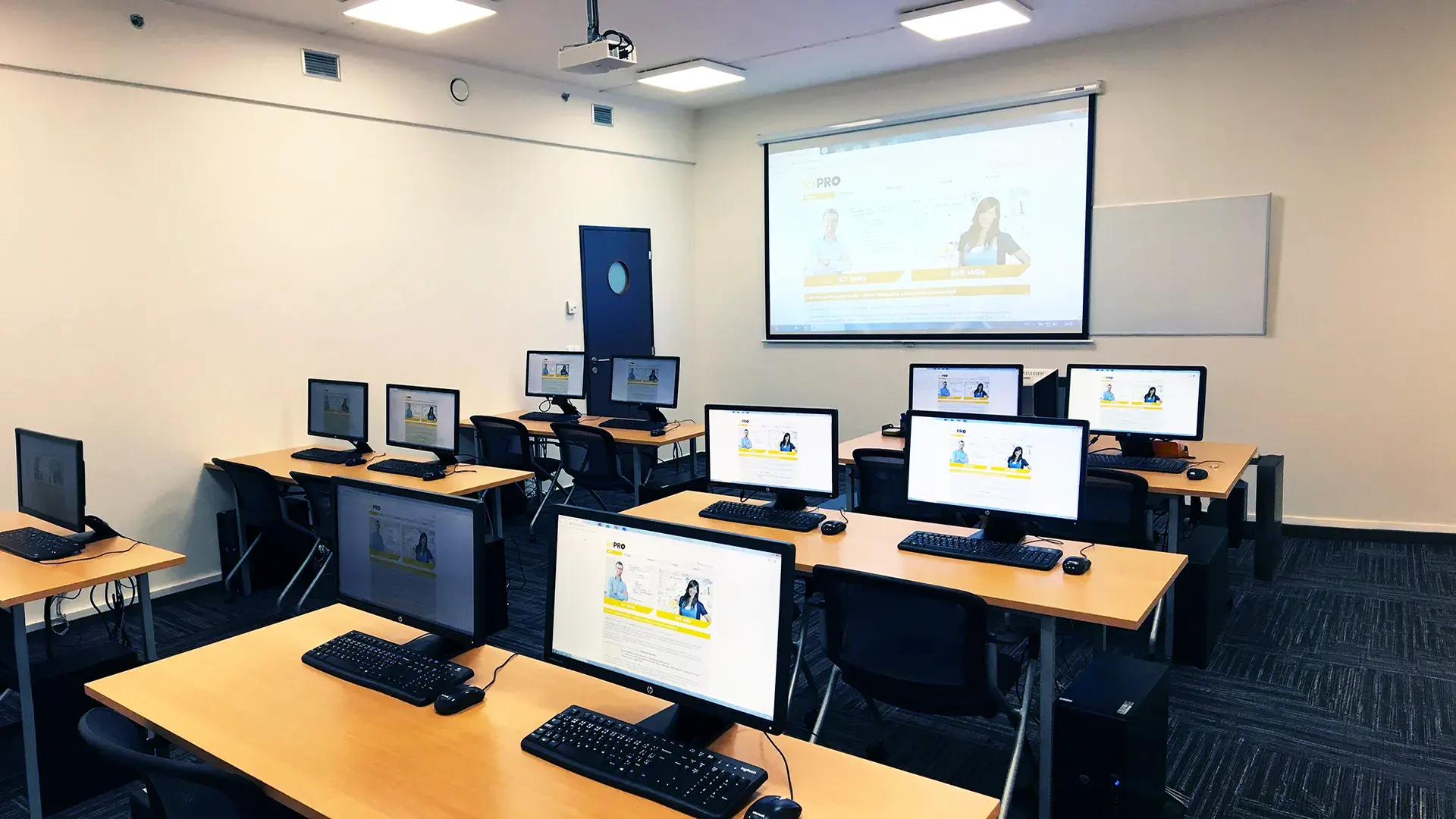 What does the environment for in-person IT courses look like?We hold training courses in our own classrooms equipped with modern computer equipment for each participant and a large projection screen. Each workstation is fitted with a powerful computer for seamless practical exercises, and the environment supports a calm, friendly atmosphere during training.
 Do I need to bring my own laptop to the classroom IT course?Our training rooms are fully equipped, so you do not need to bring your own laptop. A modern computer with all necessary hardware and software is ready for you at your workstation.
 Will you receive an official certificate after completing an IT course?Yes, upon successful completion of the training course, you will receive an official ICT Pro certificate confirming your participation and acquired technical skills. You can use it to verify your qualifications or add it to your professional profile.
 Where can you find our training center in Brno?The premises of the ICT Pro training center are located on the 1st floor of the COMGUARD building at Sochorova 38 in Brno. Positioned on the border of Žabovřesky and Komín, the location is easily accessible by both car and public transport.
 Where can you find our training center in Prague?The premises of the ICT Pro training center are located on the 1st floor of the Opatov Park building at Líbalova 1, Prague 11 – Chodov. The location provides a comfortable environment for your education with convenient access.
 What facilities and refreshments are available to you during training breaks?Our training centers feature a fully equipped kitchenette for a comfortable break during your courses. The facilities include a coffee machine, microwave, kettle, and a wide selection of drinks and snacks.
 What beverage refreshments are available during your course?A beverage station with a coffee machine, teas, syrups, and water is at your disposal throughout the entire training session. You can enjoy a coffee or another drink of your choice anytime during breaks.
 What light refreshments are provided for you during the courses?During course breaks, participants can enjoy light sweet snacks, pastries, and fruit syrups to mix their own drinks. Fresh water dispenser and plates are also available for your convenience.
 Should I bring my own snacks to ICT Pro training?There is no need to. A wide selection of savory snacks, sweet biscuits, and snack bars is available for you during breaks. Boost your energy for all-day focus right inside the training center premises.
 Can you spend training breaks in the fresh air?Yes, an outdoor terrace is available at our training center. During breaks between learning sessions, you can relax in the fresh air in a pleasant green environment.
 Where can you relax during course breaks?Our training center features a spacious outdoor terrace with seating options. During breaks between learning sessions, you can step outside to relax and recharge in the fresh air.