Java Clean Code: How to Write Clean Code in Java (JAV6)
Programming, Java, Spring
This course is for Java developers who know the basics and already work on commercial team projects. Through hands-on reviews you will learn to recognize poor code patterns, explain why they fail and adopt practices for robust software, focusing on Java, maintainability and teamwork.
You will learn to spot and fix anti-patterns, write small, single-purpose functions and meaningful names, use tests, exceptions and refactoring to reduce defects and duplication. The course emphasizes readability, automated testing and sustainable design while improving craftsmanship.
THIS TRAINING COURSE WILL HELP YOU:
- Identify and explain poorly written Java code
- Write clear, small functions and meaningful names
- Use unit tests (JUnit, Mockito) and TDD practices
- Apply design principles for maintainable systems
WHO SHOULD ATTEND?
- Java developers with basic language skills
- Developers working on commercial team projects
- Engineers who want to improve code quality and tests
COURSE LOCATION AND AVAILABLE DATES
Need this course in English?
Public courses are usually delivered in Czech, but this course is also available in English. We can arrange private training for your team online, at your premises or in our classrooms, and tailor the content to your needs.
For groups of around 4 or more participants, private training can already be comparable in price to booking individual places on a public course. Send us your requirements and we’ll recommend the best format and provide an exact quote.
Request training in English
Course content:
Hide details
-
Clean Code
-
What is bad code and its consequences for a project
-
The Boy Scout Rule, Javadoc @author
-
Meaningful names
-
Names that reveal intent; pronounceable and searchable names
-
Class and method names; how to avoid confusion and ambiguity
-
Use domain terms; one word per concept rule
-
Meaningful and justified context
-
Functions
-
Small, single-purpose functions; one level of abstraction
-
Function parameters: one, two and many parameters
-
Side effects and unintended behavior of functions
-
Exceptions vs error codes; correct use of switch
-
DRY principle; preventing code duplication
-
Comments
-
Prefer documenting by writing clear code
-
Examples of good comments
-
Examples of bad comments
-
Code formatting
-
Purpose of formatting and team formatting rules
-
Vertical formatting
-
Horizontal formatting
-
Handling error states
-
Use exceptions; start with try-catch-finally pattern
-
Unchecked exceptions; add context for the caller
-
Principle of not returning or passing null
-
System boundaries
-
Using third-party code; the Adapter design pattern
-
Discovering system boundaries; learning tests; keeping boundaries clear
-
Unit tests
-
The three laws of TDD; BDD
-
Clean tests: one test per concept; refactoring tests
-
Using JUnit, Mockito and AssertJ
-
Classes
-
Class organization; small classes; structure ready for change
-
Single Responsibility Principle (SRP)
-
Objects vs data structures; the Law of Demeter
-
Systems
-
Separate system construction from usage; separate responsibilities
-
Scaling, AOP, optimizing decision logic
-
Test-driven system architecture design
-
Parallel processing
-
When concurrency makes sense; challenges of parallelism
-
Defensive programming for concurrency
-
Importance of understanding chosen technology and computation models
-
Rules for small critical sections; issues with shutdown routines
-
Testing multithreaded code
-
Prerequisites:
-
Participants must have basic Java knowledge; prior commercial team project experience is recommended.
-
Recommended previous course:
-
Java – Introduction to Programming (JAV1)
-
Schedule:
-
2 days (9:00-17:00)
-
Price per person:
-
384.00 € ( 464.64 € incl. 21% VAT)
Training and learning environment
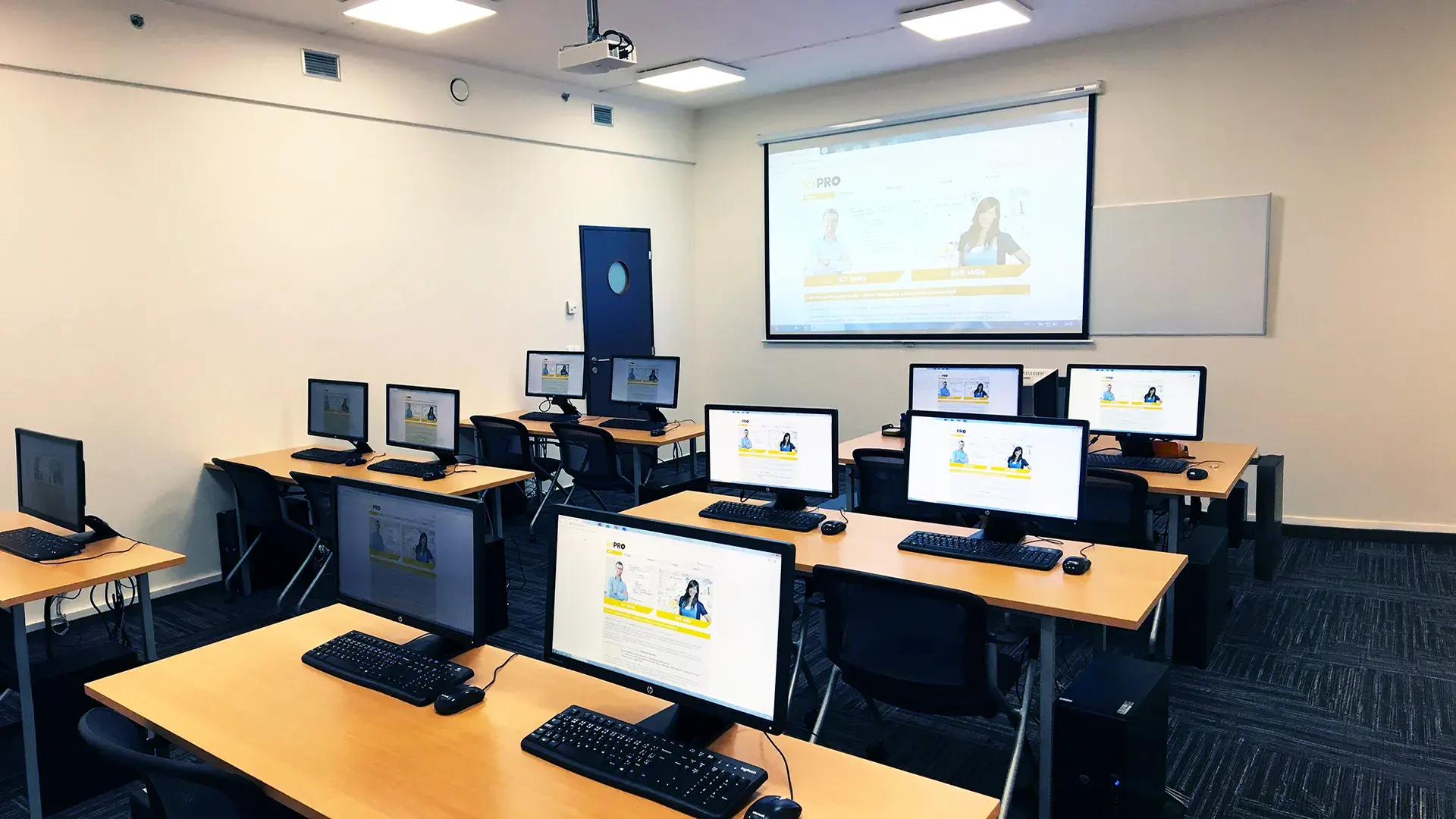 What does the environment for in-person IT courses look like?We hold training courses in our own classrooms equipped with modern computer equipment for each participant and a large projection screen. Each workstation is fitted with a powerful computer for seamless practical exercises, and the environment supports a calm, friendly atmosphere during training.
 Do I need to bring my own laptop to the classroom IT course?Our training rooms are fully equipped, so you do not need to bring your own laptop. A modern computer with all necessary hardware and software is ready for you at your workstation.
 Will you receive an official certificate after completing an IT course?Yes, upon successful completion of the training course, you will receive an official ICT Pro certificate confirming your participation and acquired technical skills. You can use it to verify your qualifications or add it to your professional profile.
 Where can you find our training center in Brno?The premises of the ICT Pro training center are located on the 1st floor of the COMGUARD building at Sochorova 38 in Brno. Positioned on the border of Žabovřesky and Komín, the location is easily accessible by both car and public transport.
 Where can you find our training center in Prague?The premises of the ICT Pro training center are located on the 1st floor of the Opatov Park building at Líbalova 1, Prague 11 – Chodov. The location provides a comfortable environment for your education with convenient access.
 What facilities and refreshments are available to you during training breaks?Our training centers feature a fully equipped kitchenette for a comfortable break during your courses. The facilities include a coffee machine, microwave, kettle, and a wide selection of drinks and snacks.
 What beverage refreshments are available during your course?A beverage station with a coffee machine, teas, syrups, and water is at your disposal throughout the entire training session. You can enjoy a coffee or another drink of your choice anytime during breaks.
 What light refreshments are provided for you during the courses?During course breaks, participants can enjoy light sweet snacks, pastries, and fruit syrups to mix their own drinks. Fresh water dispenser and plates are also available for your convenience.
 Should I bring my own snacks to ICT Pro training?There is no need to. A wide selection of savory snacks, sweet biscuits, and snack bars is available for you during breaks. Boost your energy for all-day focus right inside the training center premises.
 Can you spend training breaks in the fresh air?Yes, an outdoor terrace is available at our training center. During breaks between learning sessions, you can relax in the fresh air in a pleasant green environment.
 Where can you relax during course breaks?Our training center features a spacious outdoor terrace with seating options. During breaks between learning sessions, you can step outside to relax and recharge in the fresh air.