PHP – Advanced Programming Techniques (PHP2)
Programming, Web Programming
This course presents the PHP platform in full power, teaching how to design and organize large projects with clear OOP, proper code structure and design patterns. You will learn modern techniques for secure web applications with admin panels.
The course also covers working with images and databases, sending emails and creating PDFs, plus using web services for sending and receiving data. Practical tips on input validation, SQL and XSS protection are included.
THIS TRAINING COURSE WILL HELP YOU:
- Design and organize large PHP projects using OOP principles
- Apply common design patterns: MVC, Singleton, Factory, Adapter
- Handle images, databases, emails and generate PDF documents
- Use web services, validate input and protect against SQL/XSS attacks
WHO SHOULD ATTEND?
- Intermediate PHP developers wanting advanced skills
- Web developers building secure, modern web applications
- Developers responsible for internal admin systems
- Team leads aiming to improve code structure and testing
COURSE LOCATION AND AVAILABLE DATES
Need this course in English?
Public courses are usually delivered in Czech, but this course is also available in English. We can arrange private training for your team online, at your premises or in our classrooms, and tailor the content to your needs.
For groups of around 4 or more participants, private training can already be comparable in price to booking individual places on a public course. Send us your requirements and we’ll recommend the best format and provide an exact quote.
Request training in English
Course content:
Hide details
-
Introduction to OOP - basics and syntax
-
Creating classes and properties; encapsulation - public, protected, private
-
Creating and using fluent interfaces - method chaining
-
Constants, static properties and methods; static usage patterns
-
Magic methods: __construct, __destruct, autoload, __clone, isset/unset, __toString
-
Magic accessors and invokers: __get, __set, __call, __callStatic
-
Class inheritance: extends, implements, abstract and final
-
Creating class patterns and using instanceof checks
-
Namespaces: purpose, syntax and best practices
-
OOP - common PHP design patterns
-
Avoiding spaghetti code with clear structure
-
MVC (Model-View-Controller) - correct separation of responsibilities
-
Adapter pattern - adapt an object to behave like another
-
Singleton pattern - ensure a single unique instance
-
Factory pattern - creating objects inside other classes
-
OOP - additional practical techniques
-
Doc comments for automatic documentation and tooling
-
Standard PHP Library (SPL) - core functions and interfaces
-
ArrayObject and related structures
-
Iterator interfaces - accessing objects like arrays
-
Autoloading - project structure for autoloading and usage
-
Exceptions
-
try, catch, throw constructs and handling flow
-
Exception hierarchy and targeted catching
-
Regular expressions and security
-
What regular expressions are and their uses
-
Literals and special characters
-
Modifiers and quantifiers
-
Character classes and sets
-
Using match and replace functions
-
Sanitizing user input; preventing SQL injection and XSS
-
Testing
-
Introduction to testing and reasons for automated tests
-
Automated vs manual testing principles
-
Unit testing vs integration testing
-
Mocking techniques
-
Using PHPUnit for practical tests
-
Prerequisites:
-
Basic PHP knowledge and abstract thinking; use Windows or Mac; familiarity with C‑family languages is advantageous.
-
Recommended previous course:
-
PHP – Introduction to Programming (PHP1)
-
Schedule:
-
2 days (9:00-17:00)
-
Price per person:
-
316.00 € ( 382.36 € incl. 21% VAT)
Training and learning environment
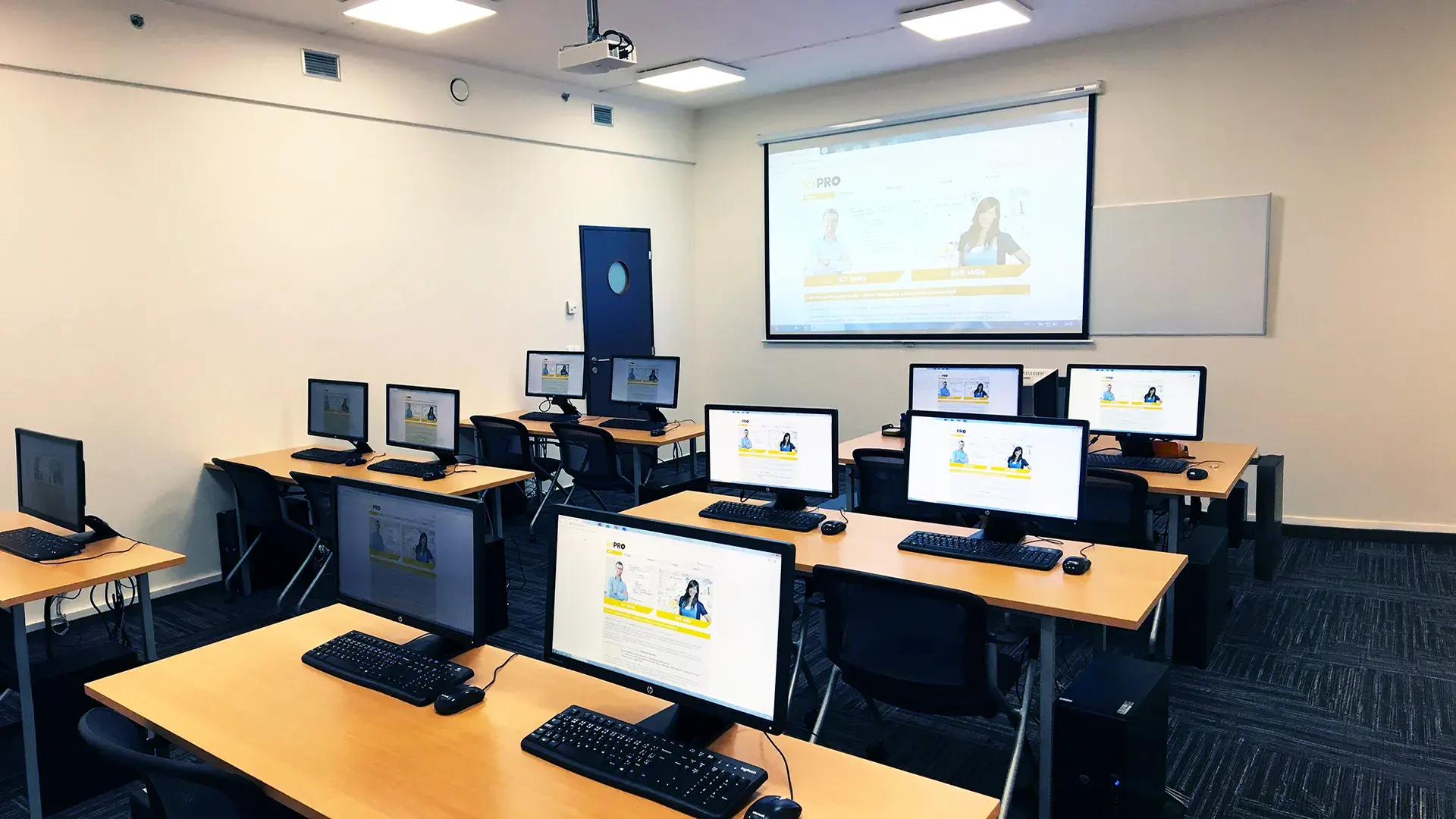 What does the environment for in-person IT courses look like?We hold training courses in our own classrooms equipped with modern computer equipment for each participant and a large projection screen. Each workstation is fitted with a powerful computer for seamless practical exercises, and the environment supports a calm, friendly atmosphere during training.
 Do I need to bring my own laptop to the classroom IT course?Our training rooms are fully equipped, so you do not need to bring your own laptop. A modern computer with all necessary hardware and software is ready for you at your workstation.
 Will you receive an official certificate after completing an IT course?Yes, upon successful completion of the training course, you will receive an official ICT Pro certificate confirming your participation and acquired technical skills. You can use it to verify your qualifications or add it to your professional profile.
 Where can you find our training center in Brno?The premises of the ICT Pro training center are located on the 1st floor of the COMGUARD building at Sochorova 38 in Brno. Positioned on the border of Žabovřesky and Komín, the location is easily accessible by both car and public transport.
 Where can you find our training center in Prague?The premises of the ICT Pro training center are located on the 1st floor of the Opatov Park building at Líbalova 1, Prague 11 – Chodov. The location provides a comfortable environment for your education with convenient access.
 What facilities and refreshments are available to you during training breaks?Our training centers feature a fully equipped kitchenette for a comfortable break during your courses. The facilities include a coffee machine, microwave, kettle, and a wide selection of drinks and snacks.
 What beverage refreshments are available during your course?A beverage station with a coffee machine, teas, syrups, and water is at your disposal throughout the entire training session. You can enjoy a coffee or another drink of your choice anytime during breaks.
 What light refreshments are provided for you during the courses?During course breaks, participants can enjoy light sweet snacks, pastries, and fruit syrups to mix their own drinks. Fresh water dispenser and plates are also available for your convenience.
 Should I bring my own snacks to ICT Pro training?There is no need to. A wide selection of savory snacks, sweet biscuits, and snack bars is available for you during breaks. Boost your energy for all-day focus right inside the training center premises.
 Can you spend training breaks in the fresh air?Yes, an outdoor terrace is available at our training center. During breaks between learning sessions, you can relax in the fresh air in a pleasant green environment.
 Where can you relax during course breaks?Our training center features a spacious outdoor terrace with seating options. During breaks between learning sessions, you can step outside to relax and recharge in the fresh air.